How to reduce the risk of pressure ulcers without increasing staffing
Pressure ulcers are one of the most demanding and costly complications in healthcare. They can lead to significant pain, reduced quality of life, and lengthy treatment for the patient, while also putting great pressure on already scarce resources. In a sector where staffing is often challenging, it is not realistic to solve the problem with more hands alone. Therefore, the question becomes increasingly important: how can the risk of pressure ulcers be reduced without increasing staffing?
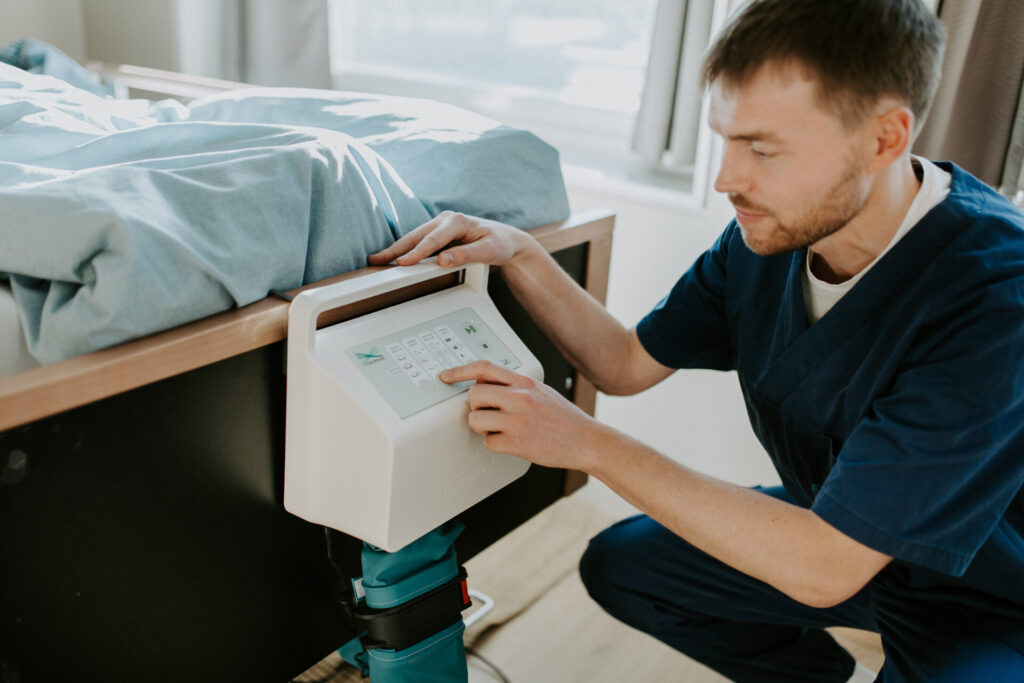
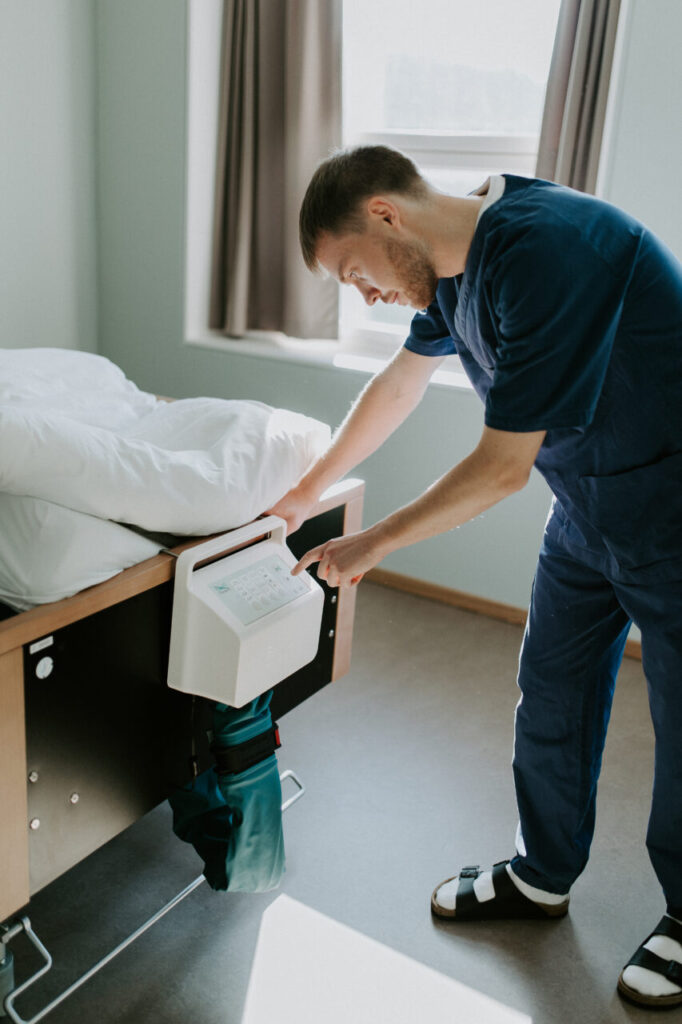
The answer lies in a combination of systematic work, correct preventive measures, and smarter use of technology. Here, solutions like Tidewave can play a central role by supporting healthcare professionals in their daily work and ensuring more predictable prevention.
- Early and systematic risk assessment is a fundamental measure in all work with pressure ulcer prevention. By using established tools such as the Braden Scale or Norton Scale, patients at risk can be identified early, so that appropriate measures are put in place before pressure ulcers develop. When such assessments are combined with solutions like Tidewave, it becomes easier to translate mapping into practical action. High-risk patients can quickly gain access to more advanced pressure relief and repositioning, without increasing the workload for staff.
- The choice of mattress is another crucial factor. For patients who spend a lot of time in bed or have limited ability to change position themselves, a standard mattress is often insufficient. Insufficient pressure relief over time can lead to tissue damage and the development of pressure ulcers, even when staff do their best. Tidewave is developed precisely to meet these challenges, by combining pressure relief with active repositioning. This provides better support for the patient and reduces the risk of prolonged pressure on the same area, without requiring more manual effort.
- Automated repositioning is one of the most effective measures to reduce pressure ulcers in an everyday life with strained staffing. When changes in position occur automatically and continuously, prevention becomes less vulnerable to staffing situations, time pressure, and interruptions in routines. Tidewave contributes to regular and gentle changes in position throughout the day, including at night, where manual turning is often difficult to implement consistently. This provides a more stable and predictable prevention, while relieving employees of physically demanding tasks.
- In addition to larger changes in position, micro-movements and even pressure distribution are also of great importance for preventing pressure ulcers. Small, frequent adjustments in position can contribute to better blood circulation and reduce the risk of tissue damage. Such movements are demanding to perform manually in practice, but with Tidewave they happen automatically and continuously. Thus, the patient can receive a more gentle and effective pressure relief, without the staff having to spend extra time or resources.
- Good routines and clear documentation are also crucial for succeeding with pressure ulcer prevention. When preventive measures are well integrated into the workflow, they become easier to follow up – even in periods of high work pressure or when using temporary staff. Tidewave can help support these routines by ensuring that repositioning is actually carried out as planned, regardless of who is on duty. This creates greater predictability and contributes to more equal practice across shifts and employees.
- Finally, it is important to see prevention in a holistic perspective. Treatment of pressure ulcers is both time-consuming and costly, and can amount to significant sums per patient. Compared to this, preventive measures are a far more sustainable investment. By using solutions like Tidewave, companies can reduce the risk of pressure ulcers without increasing staffing, while saving costs associated with treatment, follow-up, and sick leave among employees.
In summary, experience shows that it is not necessarily more employees that are needed to reduce pressure ulcers, but smarter ways of working. Tidewave is important because the solution contributes to systematic, continuous, and gentle pressure ulcer prevention that does not depend on increased staffing. By combining technology with professional practice, Tidewave makes it possible to improve patient safety, relieve employees, and ensure better resource utilization – even in a pressured everyday life.