The choice between a turning mattress and manual repositioning is an increasingly relevant topic in the health and care services. Increased focus on pressure ulcer prevention, reduced staffing and better ergonomics for employees means that many people are asking the question: What is really the best solution?
In this article, we look at 7 key differences between reversible mattress and manual repositioning, so you can make a more knowledge-based choice.
1. Pressure ulcer prevention over time
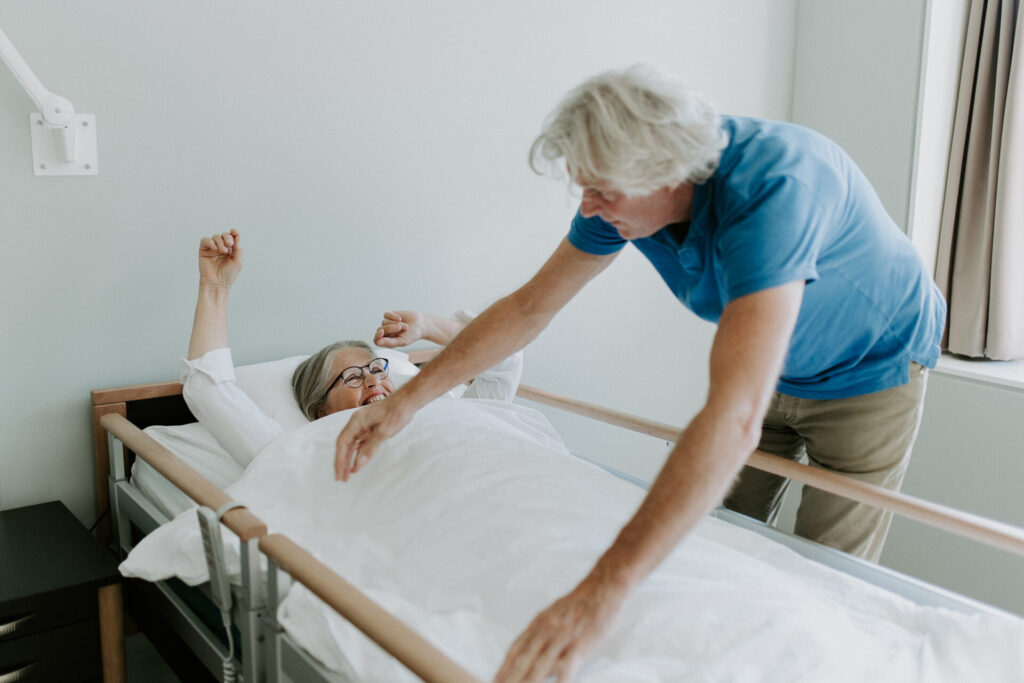
Manual repositioning is based on the patient being turned regularly, often every 2–4 hours. In practice, this can be difficult to implement consistently – especially at night or at low staffing.
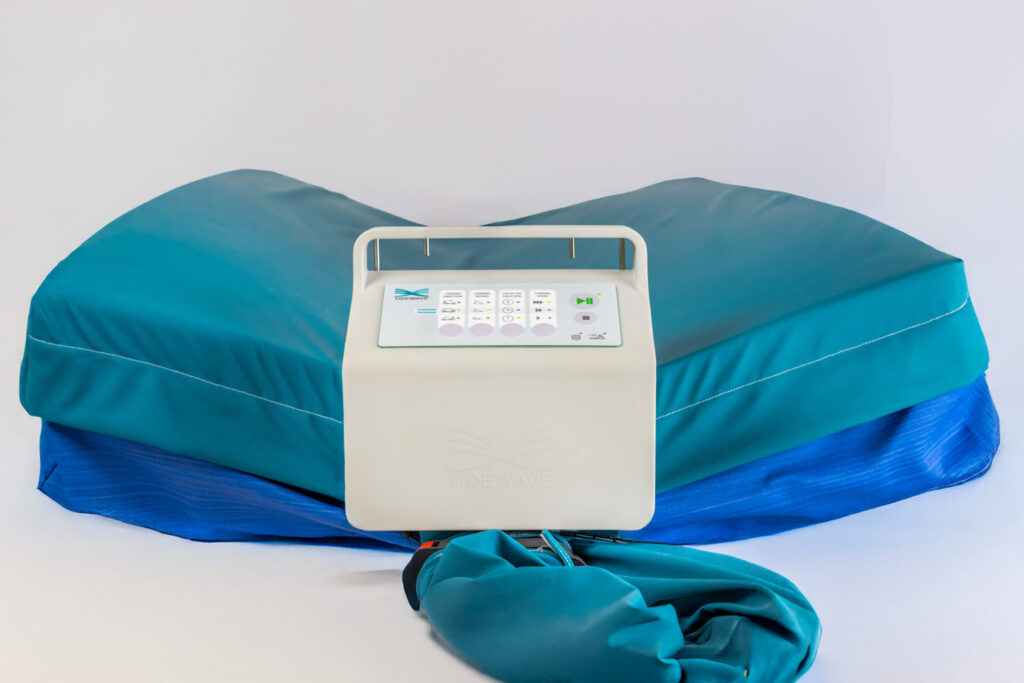
A turning mattress ensures regular position changes automatically, even when staff are not present. This provides:
-
More stable pressure relief
-
Less risk of non-repositioning
-
Better continuity of prevention
2. Burden on healthcare personnel
Manual repositioning involves:
-
Heavy lifting
-
Unfavorable working postures
-
High risk of repetitive strain injuries
Over time, this can lead to sick leave and reduced ability to work among employees. Turning mattresses reduce the need for physical handling and provide better ergonomics.
3. Time spent in everyday life
Repositioning takes time – especially when it requires two employees. This affects:
-
Time spent per patient
-
Resource allocation in the department
-
The ability to perform other care tasks
A turning mattress frees up time, because the repositioning takes place automatically.
4. Patient comfort and sleep quality
Frequent manual turning can disrupt sleep, especially at night. Automatic repositioning can be done more gently and evenly, which many patients find less invasive.
5. Flexibility and individual adaptation
Manual repositioning allows for a high degree of individualization, especially for complex medical needs. However, modern turning mattresses offer increasingly better adjustment options for angle, intervals and pressure.
6. Costs – short and long term
Manual repositioning has low direct costs, but:
-
Increased use of staffing
-
Higher risk of pressure ulcers
-
Sickness absence among employees
Turning mattresses require an investment, but can provide savings over time.
7. The future of care
With the increasing number of patients and the scarcity of personnel, automated solutions are becoming increasingly important. Turning mattresses represent a shift towards more sustainable operations.
Conclusion: Which is best?
Manual repositioning is a well-known and widely used method that can work well in many situations, but it is also resource-intensive, physically taxing for employees and highly dependent on available staffing. In an everyday life with time pressure and limited resources, this can make it challenging to carry out repositioning as consistently as recommended. A turning mattress, on the other hand, provides consistent and continuous pressure relief, reduces the physical strain on healthcare personnel and contributes to more predictable and systematic pressure ulcer prevention. For many insitutions, a turning mattress will therefore be a better and more sustainable choice over time.
Why Tidewave is a smarter choice than traditional solutions
The discussion about turning mattress versus manual repositioning is basically about one thing:
How to ensure good pressure ulcer prevention without exhausting employees or increasing staffing.
This is where Tidewave clearly differs from both turning mattresses and manual repositioning.
Tidewave combines the advantages of automatic repositioning with modern technology such as:
-
ensures continuous, gentle job changes
-
Reduces the need for heavy, manual turnarounds
-
Provides better predictability in pressure ulcer prevention – even at night
Unlike pure manual repositioning, Tidewave is not dependent on the staff having the capacity to turn the patient around at fixed times. At the same time, the solution goes further than traditional mattresses by contributing to active repositioning, not just pressure distribution.
In conclusion, the choice between a turning mattress and manual repositioning is not just about method, but about how to deliver proper and sustainable care in an everyday life with limited resources. Manual repositioning will always be part of good care, but on its own it is vulnerable to staffing, time pressure and physical strain. Tidewave represents a smarter choice because the solution combines automatic repositioning with a focus on both patient safety and the working environment. By ensuring regular job changes throughout the day, Tidewave contributes to better pressure ulcer prevention, reduced strain on employees and more predictable operations. For companies that want to take a long-term grip on both quality and resource use, Tidewave is a natural step forward.
Want to learn more about Tidewave?
Read more about the Tidewave solution and how it can contribute to better pressure ulcer prevention, less strain on employees and a more sustainable operation in practice. Do you want to get started, or are you curious about how Tidewave can be adapted to your needs? Contact us via the contact form, and we will help you find the right solution and next step.