
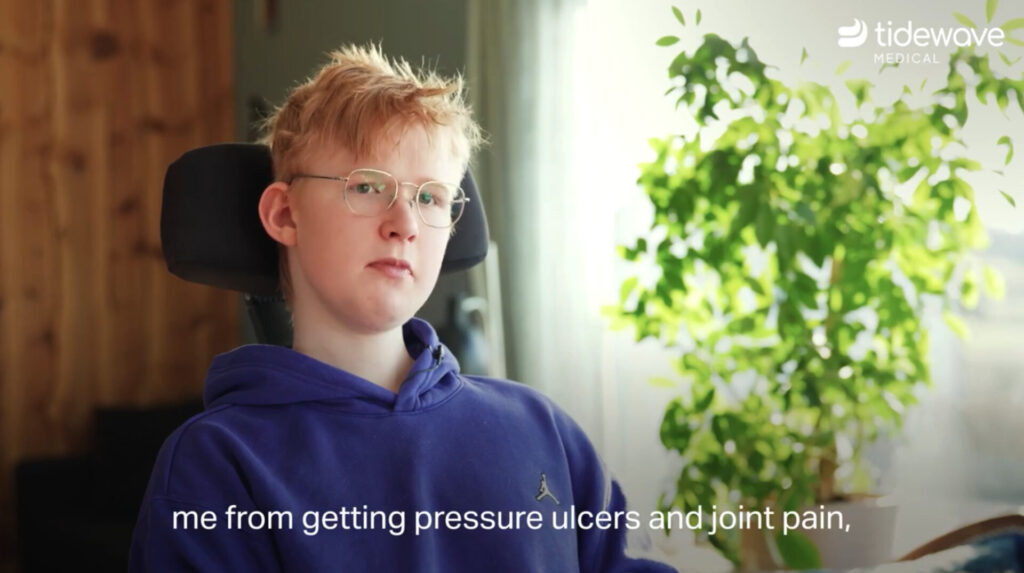
The story of Niels, Duchenne muscular dystrophy and how Tidewave gave him back his everyday life
Living with Duchenne muscular dystrophy means growing up with a diagnosis that gradually affects your whole body – and your whole life. For Niels, muscular dystrophy has never just been about muscles and function, but about how the days can actually be lived. Sleep, school, friends and family life have all been closely linked to how the nights have worked.
This story is about how better sleep became a turning point – and how Tidewave removed the need for repositioning, gave Niels continuous rest and opened the door to a whole new everyday life.
Muscular dystrophy that affects the whole day
Duchenne muscular dystrophy is a serious muscle disease that primarily affects boys. The disease leads to a gradual loss of muscle strength because the body lacks dystrophin – a protein that protects the muscles from damage. Over time, everyday movements become more difficult, and many people lose the ability to turn themselves in bed.
For Niels, this meant that the nights became one of the biggest challenges in everyday life. When the body is unable to change position on its own, there is a risk of pain, discomfort and pressure ulcers. Therefore, he previously had to be manually repositioned several times a night.
These interruptions made it difficult to get deep and continuous sleep – which in turn affected everything that happened during the day.
When poor sleep limits life
The lack of sleep put clear limitations on Niels. Without sufficient rest, the days became heavier, and the energy was not always enough. Schoolwork demanded more, concentration was lower, and the energy to be social often disappeared.
For an adolescent with Duchenne muscular dystrophy, this is extra vulnerable. When the body already uses a lot of energy on very basic functions, sleep becomes crucial for being able to participate in school and leisure time on an equal footing with others.
The family was also affected. They had to be awake at night to help, which led to wear and tear, stress and little rest. Everyday life was governed by the needs of the night.
Tidewave – a silent but decisive shift
When Tidewave became part of Niels’ everyday life, the change happened gradually – but clearly. Tidewave ensures continuous and gentle side-to-side movement throughout the night, without the need for manual repositioning.
The movement is slow and almost imperceptible, but effective enough to relieve pressure and prevent discomfort. The most important thing for Niels was that he was no longer woken up. The body finally got peace to sleep.
This continuous sleep was the start of something new.
Better sleep means better days
With Tidewave, Niels got several hours of uninterrupted sleep every night. Over time, he noticed a clear difference. The energy returned, and the days became easier to handle.
He himself tells how the extra sleep has made it possible to invest more in school. Where he previously had to prioritize hard, he now has the energy to take extra subjects in high school. It’s not just about academic mastery, but about feeling on a par with other young people.
Equally important is social life. With more energy, Niels can be with friends, participate in activities and do things that bring joy. Tidewave has not only improved sleep – it has made room for a more active adolescent life, despite muscular dystrophy.
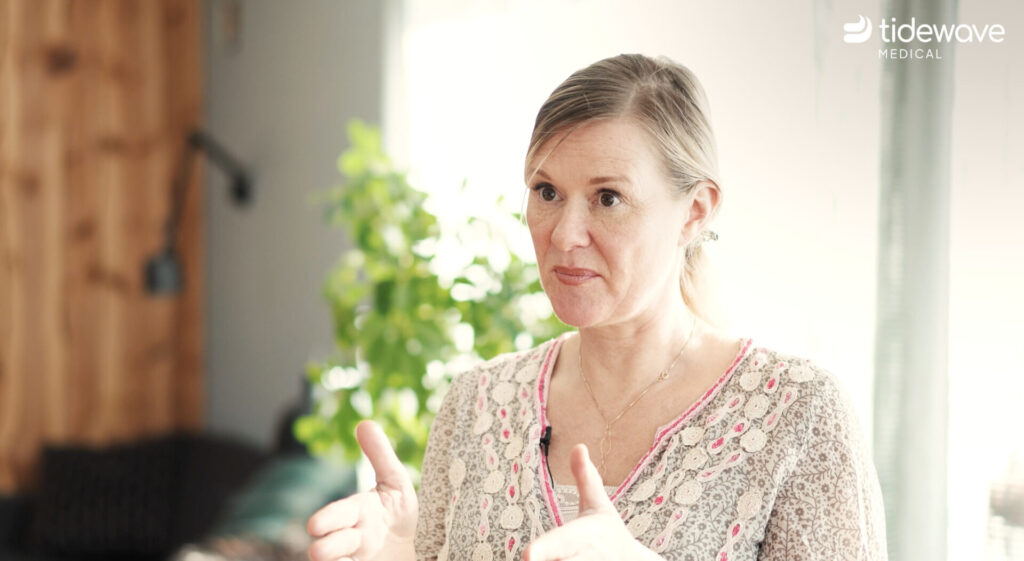
A mother’s experience: clear before and after
Niels’ mother describes the difference as significant. Before Tidewave, the nights were characterized by unrest and constant preparedness. Repositioning had to be planned, and sleep was fragmented for the whole family.
After Tidewave, she experiences a completely different calm. When Niels sleeps well, she doesn’t have to get up several times during the night. It provides better sleep, less stress and more energy in everyday life.
She describes how family life has changed. The mood is lighter, the days more predictable, and the burden associated with care is reduced. The transition from before to after Tidewave is clear – both physically and mentally.
When assistive devices provide quality of life
The story of Niels shows how important the right aid can be for people with muscular dystrophy. Tidewave has not changed the diagnosis, but it has changed the conditions for living well with it.
By removing the need for manual repositioning, the mattress has provided better sleep, increased independence and more energy – both for Niels and his family. It’s an example of how technology can contribute to more than just practical support; It can provide freedom, security and quality of life.
Small changes – big consequences
For Niels, better nights have led to better days. For the family, it has provided a more sustainable everyday life. Life with Duchenne muscular dystrophy will always involve challenges, but their story shows that the right solution can make a real difference.
When sleep works, new opportunities open up – for school, friendship and being a young person.
Watch the full story in the video here: